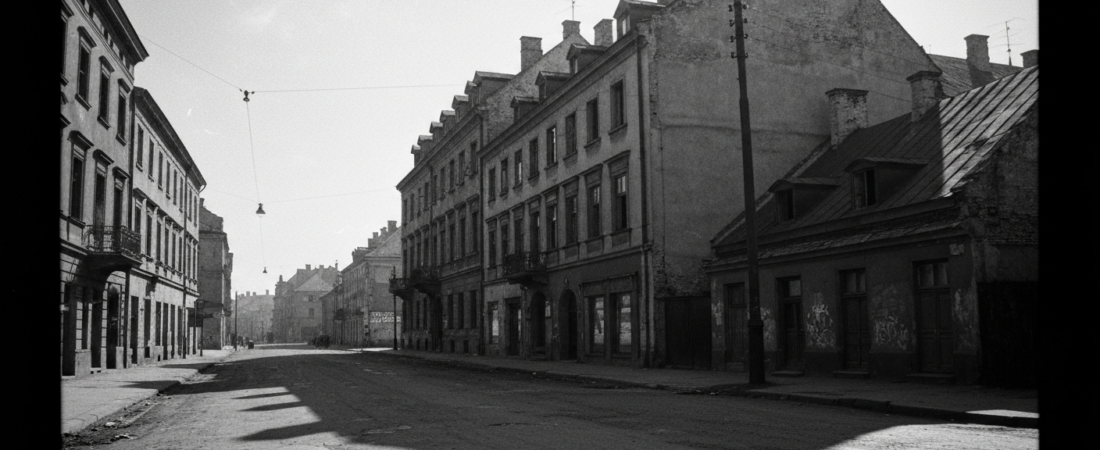
In May 1942, six weeks before mass deportations to Treblinka would begin, a Nazi film crew entered the Warsaw Ghetto with cameras, lighting equipment, and a plan. They spent weeks shooting footage intended to be edited into a propaganda film. The edit was never completed. The film sat in an East German archive for decades, labeled simply “Ghetto,” before historians found it and used it as documentary evidence — unaware that much of what they were watching had been staged.
The Making of a Lie
What the Nazi cameramen did in the Warsaw Ghetto in 1942 was technically accomplished and morally catastrophic. They organized scenes: wealthy Jews dining lavishly at dinner tables while, just outside the frame, children starved. They forced inhabitants to swim in a pool, to shop at market stalls, to attend religious services — all under the camera’s direction. The goal was to create “evidence” that the Ghetto’s misery was the result of Jewish indifference to Jewish suffering.
The footage was never released during the war. But after 1945, it circulated through archives and documentaries as a straightforward historical record — because nobody, at first, understood how deeply it had been manipulated. The discovery of unedited rushes, and the testimony of a German cameraman who participated in the shoot, changed everything.
Yael Hersonski’s Reckoning
The 2010 documentary A Film Unfinished by Israeli director Yael Hersonski is one of the most important films ever made about the relationship between documentary evidence and historical truth. Hersonski layers the Nazi footage with diary entries from Warsaw Ghetto residents, the testimony of aging survivors watching the film for the first time, and the prison diary of a Nazi cinematographer.
The effect is devastating. We watch the same images we might have seen as historical documentation — and we watch elderly survivors watching them, and we hear them describe what was real and what was false. The gap between the image and the truth becomes unbridgeable. What we see cannot be trusted. And that is precisely the point.
A Film Unfinished won Best Editing at the 2010 Sundance Film Festival and was shortlisted for the Academy Award for Best Documentary Feature. It has been screened at Cannes, IDFA, and Hot Docs, and is widely taught in film schools and Holocaust studies programs.
The Broader Question
Hersonski’s film raises a question that goes far beyond the Holocaust: when we watch archival footage, how do we know what is real? In an age of deepfakes and algorithmic manipulation, the lesson of A Film Unfinished is uncomfortably timely. Images can be weapons. Archives can lie. Documentary cinema’s most important function may be to make us suspicious of images — including its own.
The film’s title refers to more than an incomplete Nazi edit. It refers to an act of falsification that was interrupted by history, and that Hersonski’s documentary finally, definitively, finishes — by restoring the truth that the perpetrators tried to erase.
Discover more films that challenge the limits of documentary truth in our full catalog.