When Claude Lanzmann’s Shoah premiered in Paris in 1985, it ran for nine and a half hours. It contained no archival footage. It had taken eleven years to make. And it fundamentally changed the way the world thought about documentary cinema and the Holocaust — about what images could and could not do, about the ethics of asking people to remember, about the relationship between film and historical truth. That film was French. But its subject was deeply Israeli. And in the decades since, the documentary tradition it helped define has found some of its most powerful expressions in Israel.
A Tradition Built on Urgency
Israeli documentary cinema developed in a context of almost unrelenting urgency. The country’s history — the Holocaust, the founding of the state, continuous conflict, the question of Palestinian rights, the tensions between secular and religious society — provided material that demanded to be examined. What Israeli filmmakers brought to this material was a willingness to be uncomfortable, to implicate the self alongside the subject, and to refuse easy resolutions.
The films in the Cinephil catalog represent this tradition at its finest. A Film Unfinished (2010) by Yael Hersonski examines Nazi propaganda through the eyes of Ghetto survivors watching it for the first time. Stalag (2008) by Ari Libsker excavates the strangest chapter in Israeli popular culture. My Sweet Canary (2011) recovers the story of a Sephardic Jewish singer who embodied the vanished multicultural world of the Eastern Mediterranean. Each of these films is rooted in Israeli experience — and each has resonated far beyond Israel’s borders.
The Festival Circuit as Global Platform
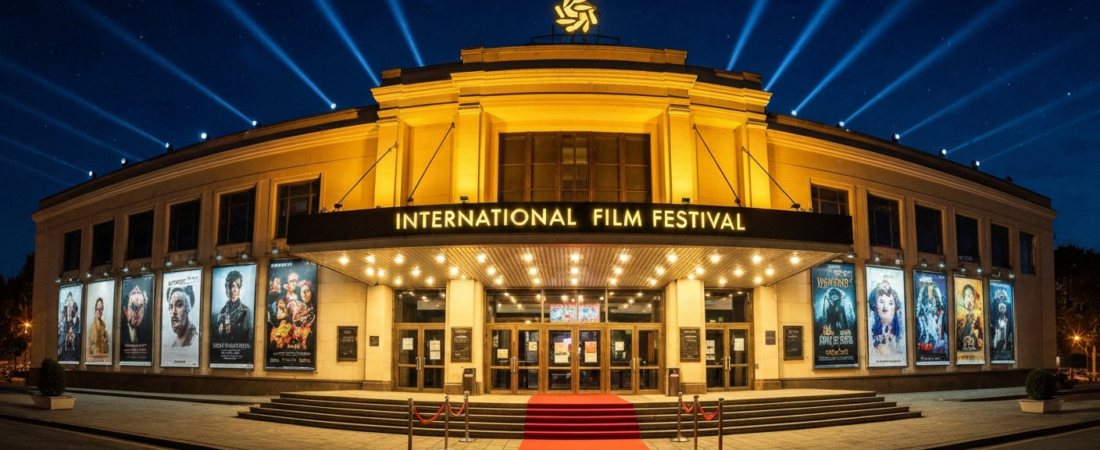
Israeli documentary cinema’s international visibility has been built through the festival circuit — a global network of platforms where non-fiction film is selected, awarded, discussed, and sold. Cannes, Sundance, SXSW, Hot Docs, IDFA, Berlin: these festivals are not just premiere venues. They are markets, press platforms, and prestige launchers that determine whether a film reaches audiences in 10 countries or 60.
Israeli films have competed and won at all of them. Claude Lanzmann: Spectres of the Shoah (2015), distributed by Cinephil, won the Academy Award for Best Documentary Short Subject after premiering at Cannes. The Look of Silence (2014), also in the Cinephil catalog, won the Special Jury Grand Prize at Venice and was nominated for the Academy Award. These are not exceptions. They are the result of a documentary culture that has developed strong institutional infrastructure — including DocAviv, Tel Aviv’s own documentary festival, which the European Film Academy ranks among the world’s major non-fiction festivals alongside Cannes, Hot Docs, IDFA, and SXSW.
What Makes Israeli Documentary Distinctive
If there is a common quality that defines the best Israeli documentary work, it is a particular relationship to discomfort. Israeli filmmakers tend to make films that ask hard questions about their own society and their own history — about what memory does and does not include, about who gets to tell the story, about the relationship between official narrative and private truth.
This quality travels. In a documentary landscape increasingly saturated with product, films that take genuine ethical risks stand out. Israeli documentary cinema has built its international reputation not through volume but through the quality of its confrontations — with history, with self-image, and with the limits of what the documentary form itself can truthfully do.
The tradition is alive. And so is the conversation it demands.
Browse the full Cinephil documentary catalog — films that challenge, provoke, and endure.